LINK-EU celebrated rural territories’ resilience, fostered long-term cooperation and built a shared narrative of EU’s rural communities through the organization of four main events across rural Europe. Through workshops, expert meetings and dissemination of good practices, LINK-EU improved citizens’ and local authorities’ knowledge of EU policies while promoting local initiatives. The main product of the project was the building of the Rural Resilience Roadmap, including a shared long-term vision of rural territories of Europe and solutions to perform the transition in rural Europe. The Rural Resilience Roadmap was built throughout the four events of the project as a guiding thread. LINK-EU was made of 4 events held in Portugal, France, Spain and Hungary, each involved around 25-50 participants. The main activities of the project was the organization of the 4 events, and the conduct of online public consultations between the events reached out to the broader public and co-constructed the Rural Resilience Roadmap. The events involved: – Local elected officials who shared experiences on local strategies/actions and participative processes; – Citizens/Civil society organizations reflected upon citizens’ participation – Experts/Academics enriched the discussions with scientific analysis and social and technological innovations – EU and national decision-makers, discussed on how rural communities can be supported by National and EU policies Each event was composed of a field tour, workshops and a policy or expert conference that reinforced the sense of belonging to the EU for participants, shared more that skills and knowledge but also their cultures and landscapes. The main realization of the project, the Rural Resilience Roadmap described how to build more resilient rural communities, was communicated in some ways to EU decision-makers at the end of the project. The Roadmap offered a unanimous voice and a clear message on rural communities needs and potentials. The number of participants was <100 to ensure that every voice has been heard in the dialogue and that the participants became effective ambassadors of the shared vision when they went back to their territories. A close attention was paid to the representativeness of participants, with an equal representation of women and men in the events. LINK-EU strengthened feeling of belonging to the EU, the creation of a space for dialogue between local actions and European bodies, and more actions for the implementation of the transition supported by resilient policies.
ENER’do AVE – July 22
The 2022 edition of RURENER annual meeting was yet another success! Thanks to the funding provided by the European Union through the Citizens Equality Rights and Values programme, this year’s event was a whirlwind of languages and discussions. Almost 40 participants from 7 EU countries took part in the workshops, presentations and visits between July 6th and July 8th, 2022. You can check the full report of the event here.
As the main goal of the LINK-EU project is the building of the Rural Resilience Roadmap, a key document for RURENER’s members, we are also opening up a public consultation to collect more contributions on the trajectory of rural territories, the current barriers and initiatives. Take a few minutes to give us your feedback!
ENER’Monts du Lyonnais – December 22
At the end of 2022, the ENER’Monts du Lyonnais event took place in the association of Communities Les Monts du Lyonnais from November 30th to December 2nd 2022 to continue the building of the Rural Resilience Roadmap for the LINK-EU project, co-funded by the European Union through the Citizens Equality Rights and Values programme.
The event was focused on local innovation in rural areas and systemic approaches. The Monts du Lyonnais community developed a transversal sustainability programme that supports a systemic transition. Gathering over 25 people from 7 E.U. countries, the group visited key places on the community to embrace its approach and sense of innovation.
ENER’Avila – June 23
The ENER’Avila event took place from June 19 to 21, 2023, in the territory of the Diputacion of Avila in Spain. A total of 27 participants attended the event, including elected officials, local government agents, socio-economic actors, and research institutions/universities from 7 European countries (Portugal, Cyprus, France, Spain, Greece, Hungary, and Romania). This event was the third event of the LINK-EU project, co-funded by the European Union through the Citizens Equality Rights and Values programme. The event consisted of:
Conferences: Participants presented the progress that has taken place in their respective regions and discussed the new challenges they are facing.
Field visits: Visits were made to the municipality of Gotarrendura, showcasing its photovoltaic initiatives, the municipality of Las Navas del Marques, illustrating policies in support of the circular economy and the importance of biomass, the production of local beer in El Barraco, and the municipality of El Hoyo de Pinares, supporting citizen participation to re-build after forest fires.
Workshops: Building on the previous LINK-EU events, workshops focused on developing a roadmap for a resilient European rural area. Additionally, discussions revolved around the future of the RURENER network and how to translate the ambitions and needs of rural communities into policy recommendations.
ENER’Nagypali – May 24
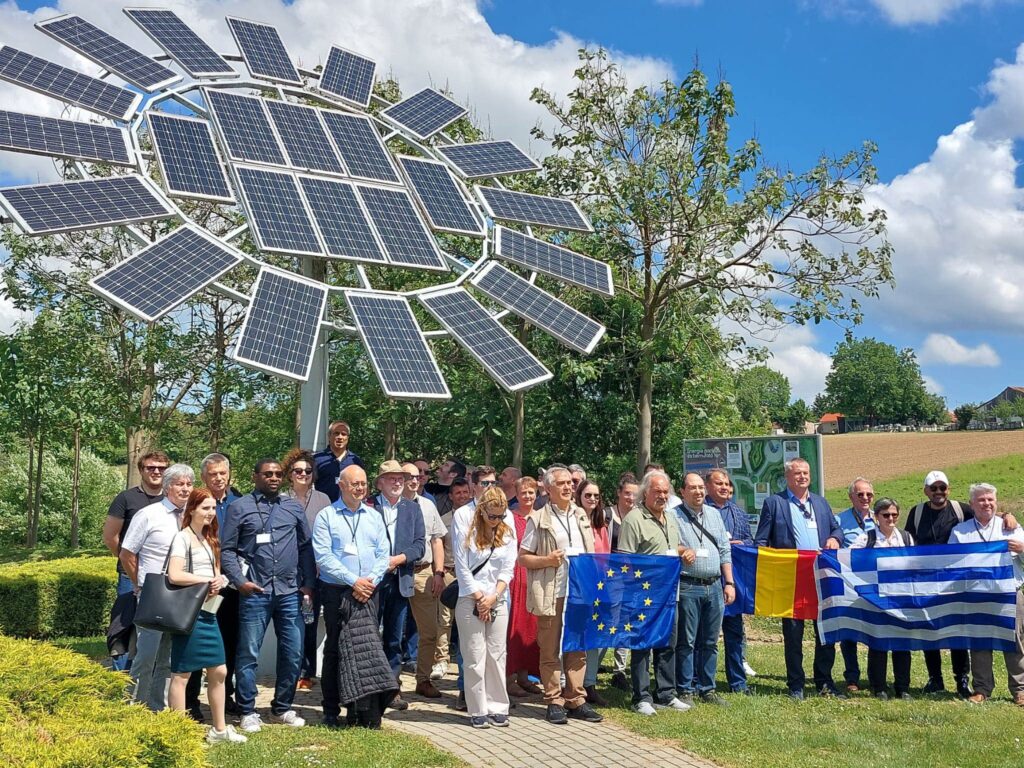
The fourth and final event of the LINK-EU project took place from May 13th to May 15th, 2024, in Nagypali, Hungary. A month before the European elections for the Members of the EU Parliament, delegations from 8 E.U countries visited the village of Nagypali, known as a pioneer of the energy transition at E.U. level, and its surroundings. In total, over 40 participants from 9+ E.U. countries took part in the event. The programme was dense, composed of field visits (water treatment facility, solar PV plant, renewable energy park, positive energy building, etc.) and conferences and workshops to discuss messages from rural communities towards European decision-makers and the future of the European network RURENER, at the manoeuvre of the E.U project.